|
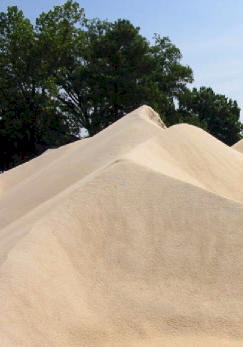
Here shown off white washed beach play-sand turns whiter as sun bleaches color.......... back to previous page
The Hazards of silica sand has been know for hundreds of years, beach sand is harmless because grains are of a larger size of silica which cannot be deeply inhaled .However blasting or use of modern day equipment used to pulverizes the sand creating a fine dust which is dangerous because it can be deeply inhaled OSHA launches new special emphasis program concerning silica sand dustby Tim Duffy, CIH; Datanet Engineering Inc. I. General: In a May 8 news release, OSHA announced a special emphasis program (SEP) to reduce silica dust exposure. Continuing through the end of 1997, in-depth OSHA inspections will be provided to project work involving exposure to silica. The SEP began with a 60-day informational outreach campaign, followed by inspection activities. Additionally, a comprehensive silica standard is anticipated to be released at the end of 1997. This will bring together the regulations scattered throughout the OSHA construction standard governing silica. Construction activities with potential exposure to silica, such as jack hammering, rock drilling, abrasive blasting, concrete mixing, and slab cutting, may receive heightened inspections. Painting contractors continuing to use silica-containing abrasives, such as sand, may be subject to special scrutiny. II. Health Effects: Silica dust causes lung damage and a group of diseases collectively known as silicosis. Silicosis may occur as a chronic (slow-acting) or acute (fast-acting) illness. Permanent lung damage and fatalities continue to occur. Acute silicosis is caused by very high exposures to silica dust and is usually fatal within months. Painting contractors should note that abrasive blasting without respiratory protection is a primary cause of acute silicosis. Chronic silicosis occurs more frequently than acute silicosis and can remain undetected for years. The human lung’s reaction to inhaled silica is complex and not completely understood. Basically, the lungs will enclose the inhaled crystals in a fibrous type of tissue. As each silica crystal is surrounded by tissue, the lung loses that space as functional tissue for breathing. The person inhaling silica will therefore gradually begin to lose lung surface area and the ability to absorb air through the lungs. Adding to the silicosis problem is that upon reaching a certain threshold level, the lung will continue to lose functional area even though exposure to silica ceases. Major silicosis disease is similar to starting a fire and having it continue burning after the match is removed. III. Standards: Current rules governing silica exposure consist of a patchwork of OSHA regulations. Construction regulations include air sampling to assure that your exposures are within permissible exposure limits. The OSHA exposure limit changes slightly based upon the percent of free silica in the dust cloud. When above the PEL, respiratory protection, personal protective equipment, warning signs, hygiene facilities, enclosures, and engineering controls are required. Even if below the PEL, general regulations such as hazard communication, safety and health program, and training are still required. IV. What Should a Painting Contractor Do? To perform a painting project and avoid needless headaches concerning the OSHA silica SEP, the following should be considered: 1. Change materials used on the jobsite to avoid the use of abrasives containing “free silica.” Manufacturers’ material safety data sheets should include information concerning the presence of silica dust. Our company’s projects include substitute abrasives for silica sand. For a painting contractor to use an alternative abrasive economically, he must train his people accordingly. Recycling capabilities associated with other abrasives have improved the economics associated with their use. 2. Be aware that free silica may occur in the substrate which is blasted. Concrete substrates especially may contain silica. Silica dust control on concrete can often be achieved by using wet blasting or waterblasting methods. 3. If silica cannot be avoided on a project site, the contractor should implement what OSHA calls “an effective and ongoing silicosis prevention program.” The OSHA directive actually encourages their inspectors to leave a jobsite with an effective silicosis program after a review of paperwork and a walk-through inspection. OSHA states an effective silicosis control program will include:
4. If an OSHA inspector visits a silica jobsite and the above are not in evidence, the contractor should prepare for a fairly detailed inspection and may wish to consider several aspirin. V. Conclusion: The OSHA news release, the history of injured blasters, and the regulatory climate seem strangely similar to that leading up to the lead regulations. The slower onset of silicosis illness makes it a bit more of a vague illness than lead exposure, in which high blood lead levels can be measured shortly after a project. The hazards of silica sand have been known for hundreds of years. Beach sand is not hazardous, because the grains are of large size and cannot be deeply inhaled. However, blasting, use of power tools, and other modern equipment pulverize the sand, creating a fine dust which is dangerous because it can be deeply inhaled. OSHA seems to have decided it’s time to focus on the management of silica dust hazards. The easiest way to avoid problems with silicosis is using non-silica abrasives whenever possible. Tim Duffy is a Certified Industrial Hygienist at Datanet Engineering Inc., a Baltimore consulting engineering firm specializing in corrosion/environmental engineering and industrial hygiene services. |
Price List mulches soils & Hours compost organic Soil Mixes Flower & mixes Aggregates gravel driveway, drainage
|